Share
ReviewPoetry · 3 min read
The Non-Sequitur of Snow
Australian poetry: Atherton; Hose; Huppatz; Kocher – review by Michael Farrell in The Australian
Written with Adrienne Rich and Rumi as apparent guides, Shari Kocher’s The Non-Sequitur of Snow… is very different again from the preceding three. Her poems for the most part are of a rare modesty and lightness. The two-page poem Strawberries, for example, narrates a story of a marriage proposal in a strawberry field — that the narrator’s lover doesn’t remember taking place — without becoming icky or indulgent. Clay presents a mother, son and grandmother together making clay angels for a nativity table. The grandmother “hasn’t visited in years”; a comment that creates a separation between the two women. The poem consists largely of the grandmother’s loving relation with the boy. It concludes:
and tilts my son’s head
(his shining head) to plant a kiss that began
long ago in the top left-hand
corner of the window now framing
her face the bones of her face
her fine dry hair on fire
It’s a remarkable ending, the transcendent metaphor given to the grandmother, in the gradually shifting voice of the grudging mother: an image of unusual generosity, as if, after denying that her son is an angel, she admits, without any sign of sentiment, that her mother is one.
There appears to be something significant for the poet in the image of the mother’s hair: it recurs in My Singing Empty Hands, another intergenerational poem, told through a scene of two sisters, rowing (in both senses). The poem is a balancing act between the cloying title and the sister’s bad mood. There are eight different smells and two tastes: “my sister’s words / smell strongly of washing powder … my sister’s hands on the oars / smell of soap and some sinister / cheap perfume my daughter sometimes / wears when she is angry … I taste the snow in the air between us … my sister’s tears / taste like lamingtons”. The poem ends with smell and the mother’s hair: “the smell of iron filings / something burning / she wears our mother’s hair”. Kocher combines both pathos and synaesthesia, as if the image of the mother’s hair produces the smell of burning.
Following Rich, rather than Rumi, Kocher’s tongue is not always quiet, particularly in the ambitious longer poems Notes from the Abyss and The Bridge; both, however, despite the wit of “jug jug jug” in the former, cite Eliot unnecessarily. More subtly, A Letter to Dorothy Hewett is admirable in its unpretentious thinking through of what Hewett’s death meant to the younger poet, and there’s a great Woolfean ekphrasis in The Canvas.
This review first appeared in The Australian.

More reviews
Review · Anthologies
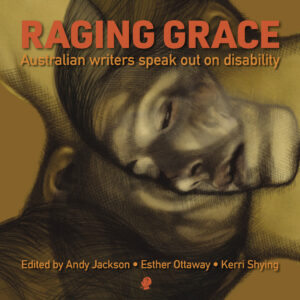
Raging Grace: Australian Writers Speak Out On Disability
“… the incisive, creative critiques of the medical model and its legacy … the radical rejection of subject/object…”
Reviewed by Erin Scudder
Sydney Review of Books · 7 Apr 2025

Review · Poetry
She Doesn’t Seem Autistic & Sanctuaries
“There is something about [She Doesn't Seem Autistic]! It’s like nothing I have ever come across before.”
Reviewed by Jennifer Compton
Cordite · 25 Mar 2025